As modern healthcare models advance, hospitals are increasingly adopting multi-functional and multi-center layouts. By clustering related disciplines according to specific medical conditions, hospitals can optimize space utilization and improve operational efficiency.
At the same time, the healthcare service model is shifting from a treatment-centric approach to a patient-centric one. A key solution lies in organizing medical services around patients’ needs and streamlining their pathways within the hospital to minimize travel distances.
About Heyou Hospital
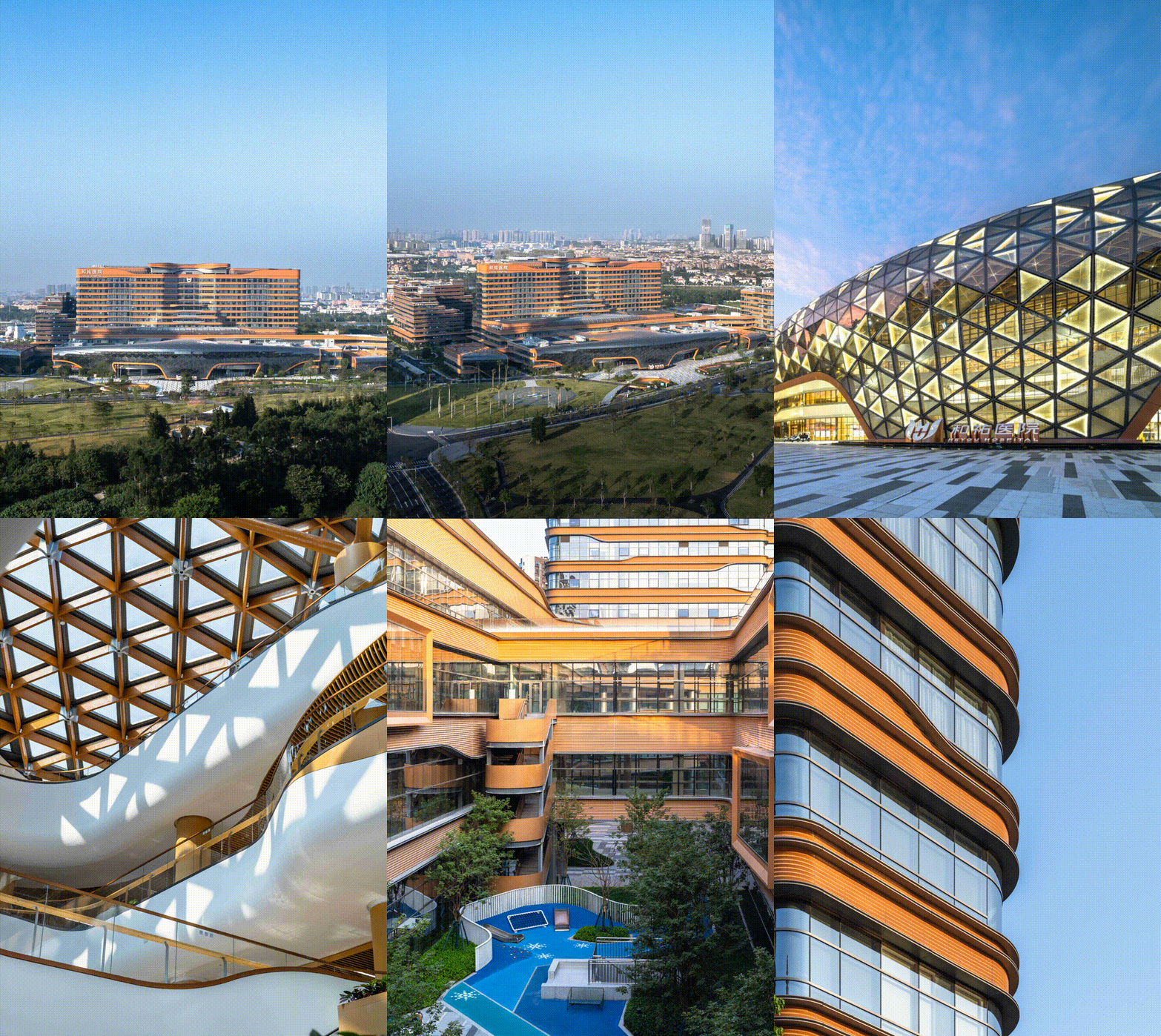
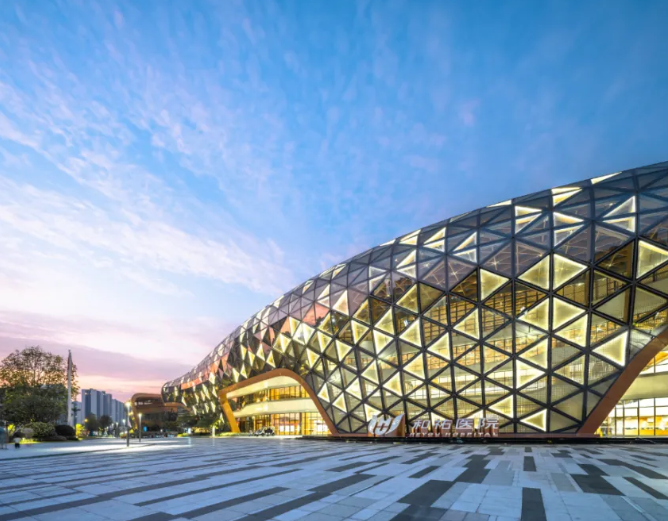
Located in Shunde District, Foshan City, Guangdong Province, Heyou Hospital spans a total site area of approximately 152,000 square meters, with a total floor area of 380,000 square meters and a capacity of 1,500 patient beds. As the first private non-profit tertiary general hospital in Foshan, the project is positioned to become a large-scale medical complex that serves "all population groups, covers all life cycles, and provides comprehensive care." In addition to the tertiary general hospital, the project also includes an internationally-oriented secondary general hospital and the second proton and heavy ion center in China.
Medical Planning
With a site area of 150,000 square meters and a complex functional layout, the paramount priority of this medical planning initiative is to design from the patient's perspective while simultaneously ensuring highly efficient operational workflows.
01 Medical Function Layout
Multifunctional – A Comprehensive Layout of Medical Disciplines
Heyou Hospital's discipline arrangement fully aligns with the regional disease spectrum and local healthcare needs in Foshan. In consideration of local medical requirements, the hospital campus incorporates a relatively complete functional layout of general hospital disciplines, enabling patients to fulfill all treatment needs within the facility. The first phase has established 46 departments, including 9 surgical departments, 14 clinical departments, 14 non-surgical departments, and 9 diagnostic and auxiliary medical departments.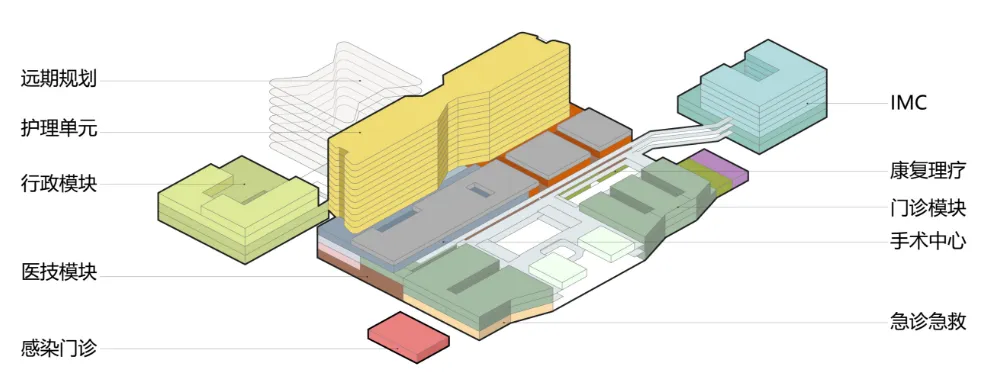
Multi-Center – A Multi-Disciplinary Center-Based Diagnosis and Treatment Model
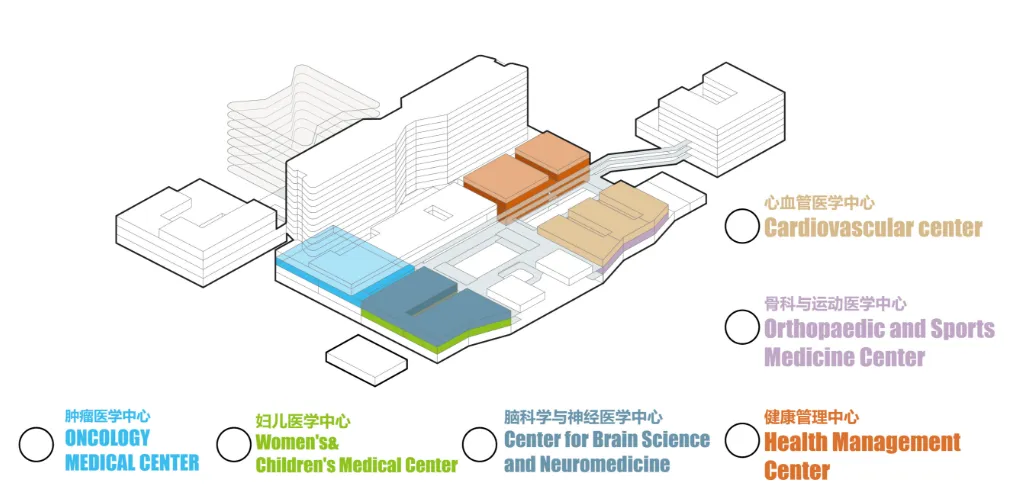
The medical planning follows a one-stop, disease-centered diagnosis and treatment concept. Under a vertically-integrated multi-center model layout, the hospital focuses on building six major Centers of Excellence: the Oncology Medical Center, Orthopedics and Sports Medicine Center, Brain Science and Neurology Center, Women and Children's Medical Center, Cardiovascular Center, and Health Management Center. The one-stop layout design shortens patient travel distances within the hospital and maximizes convenience for patients.
02 Key Points of Medical Planning
Foundational Framework: A Highly Efficient & Expandable Medical Mainframe
First, an expandable T-shaped circulation backbone is designed as the foundational Medical Mall, interconnecting all complex functional zones. The Medical Technology Department is strategically positioned at the core, encircled by outpatient and emergency departments to effectively minimize patient travel distances.
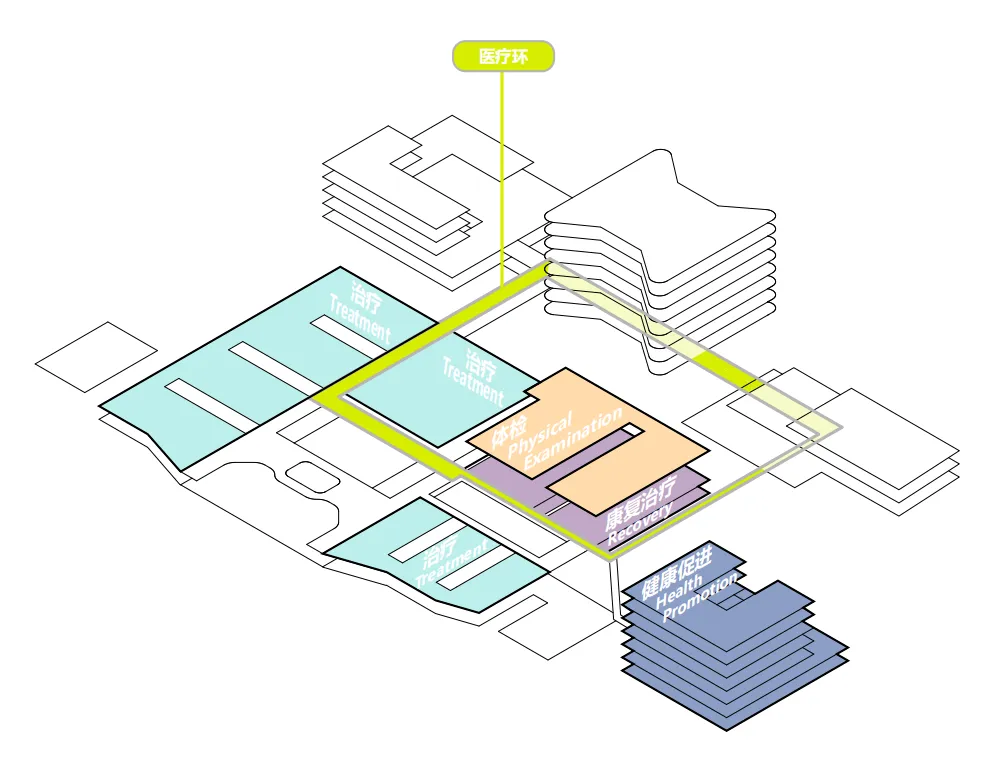
Looking ahead, this T-shaped spine can be extended into a loop layout to meet long-term growth needs, achieving a closed-loop functional system. The future establishment of a Translational Medicine Center will further drive the hospital’s comprehensive development across clinical care, education, research, industry, and innovation, aligning perfectly with the institution's strategic positioning.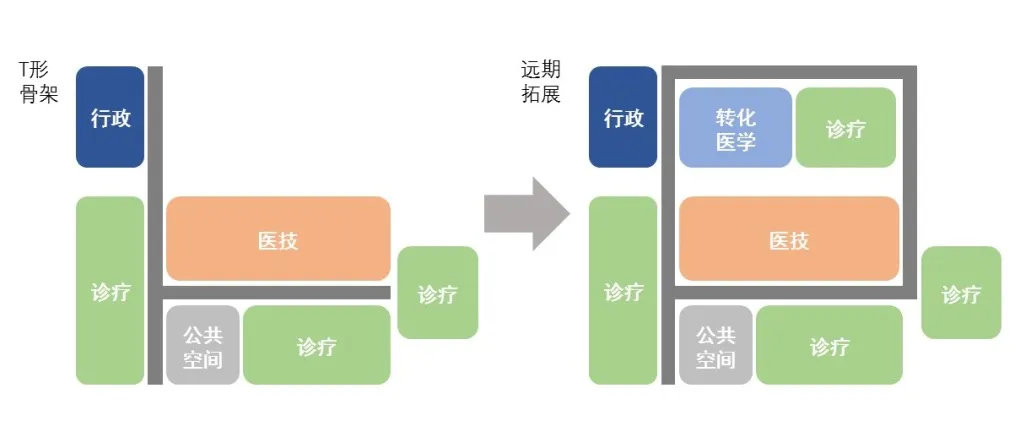
Internal and External Zoning: Maximized Separation to Ensure Patient Privacy
Traditional medical layouts often overlook the intersection of outpatient and inpatient flows, leading to significant inconvenience and a loss of privacy for inpatients during their visits to medical technology departments.
To address this, the design utilizes both vertical and horizontal circulation strategies to decouple the arrival paths of inpatients and outpatients. By physically separating these flows, the layout eliminates cross-traffic and preserves the dignity and privacy of inpatients throughout their clinical journey.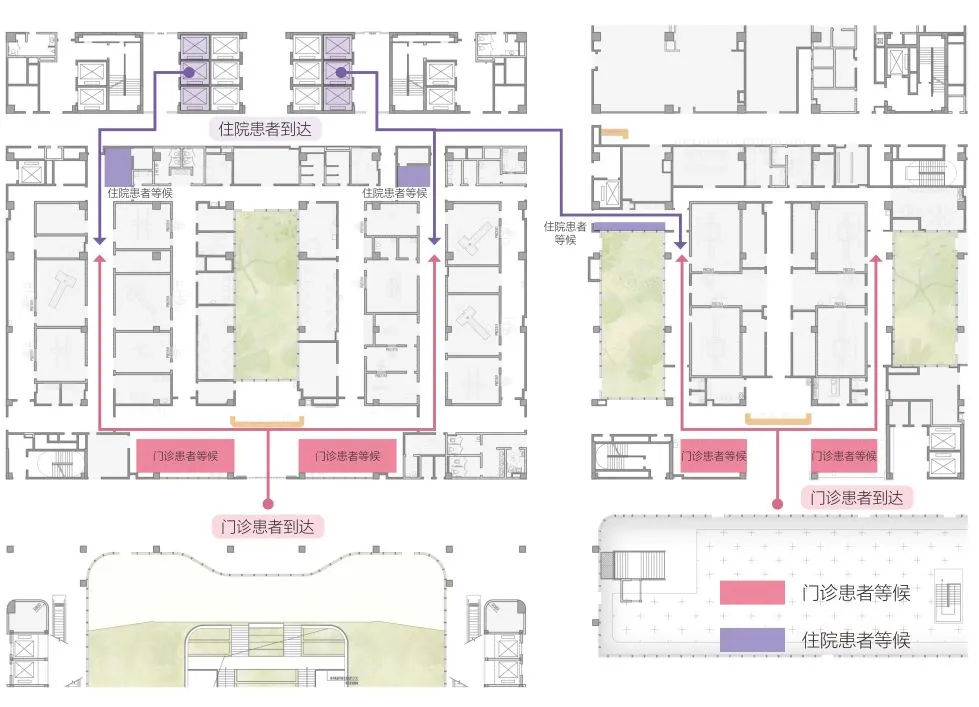
People-Oriented: A Patient-Centered Layout Model
This design reflects a conceptual shift from "clinical convenience" to "patient convenience." This philosophy is physically manifested through the architectural layout in the following ways:
Optimized Circulation: In terms of flow, the design reduces the radial distance of vertical connections, ensuring patients can reach treatment departments via the shortest possible paths.
Centralized Functional Nodes: On the floor plan, clinical functions are clustered around patient zones. Waiting areas are integrated with immediate support services—such as registration, payment counters, blood collection rooms, restrooms, and water stations—to provide a seamless service experience.
Healing Environments: The layout maximizes natural light and open views across waiting areas, consultation zones, and the medical mall. By leveraging sunlight and expansive vistas, the design aims to alleviate patient anxiety and significantly enhance the overall outpatient and inpatient experience.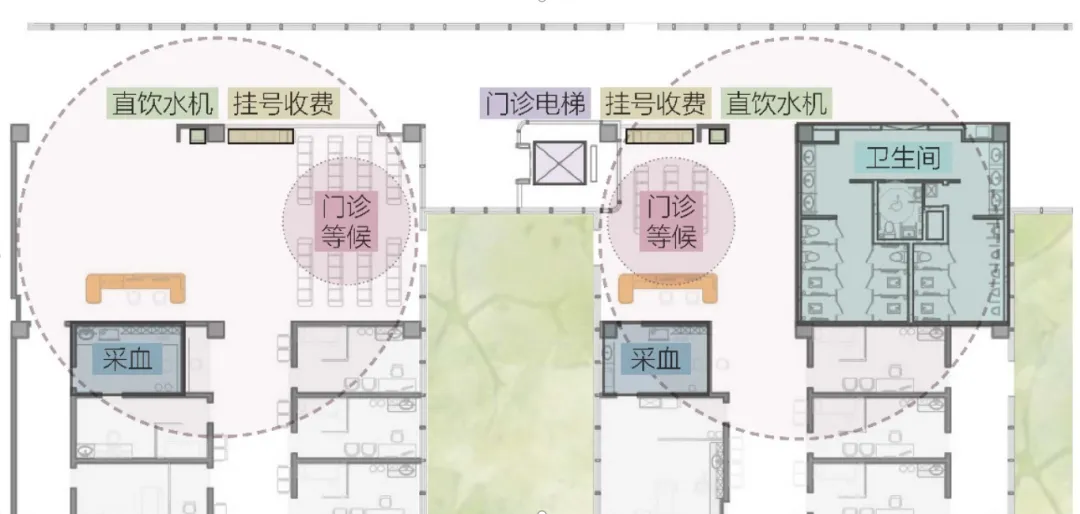
Outpatient Waiting Area Layout Diagram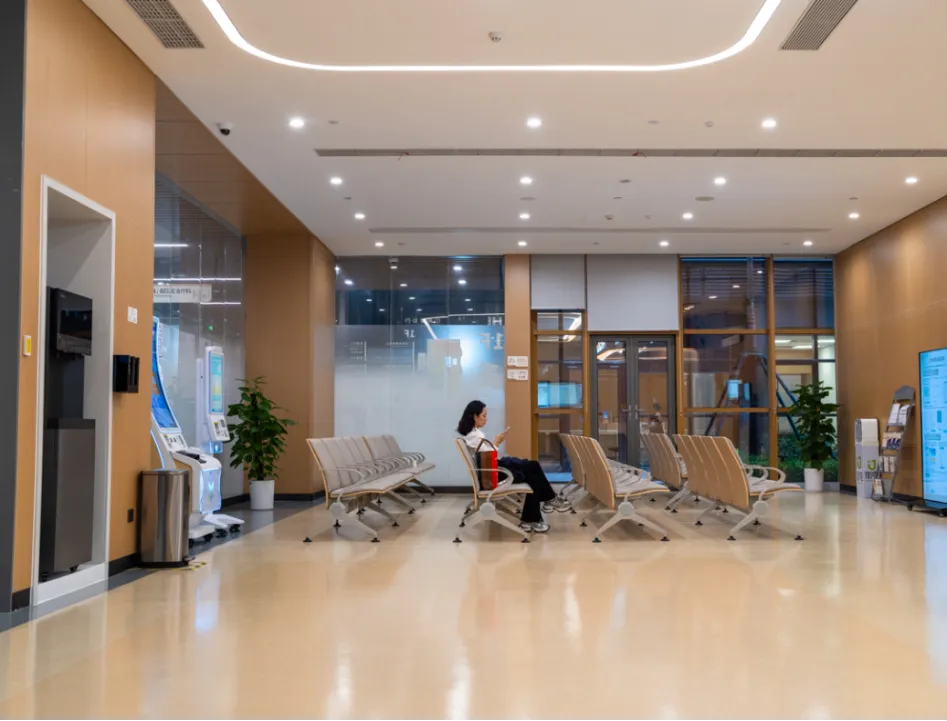
Outpatient area lighting design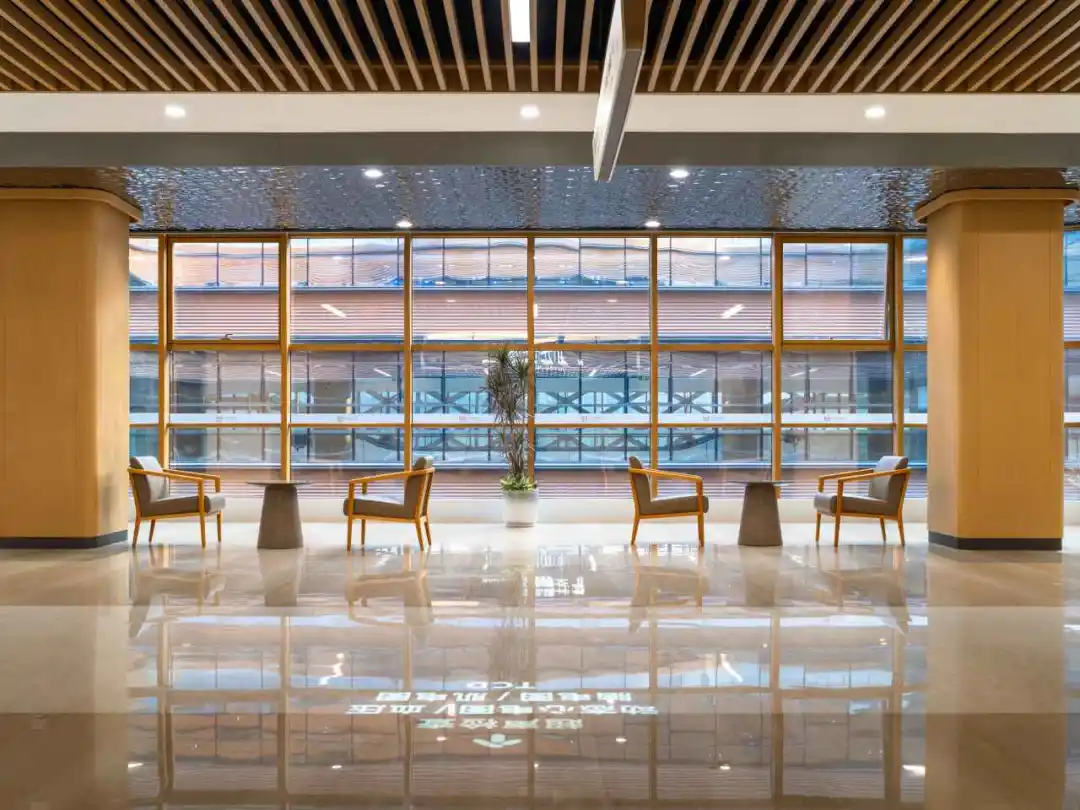
Outpatient clinic waiting area
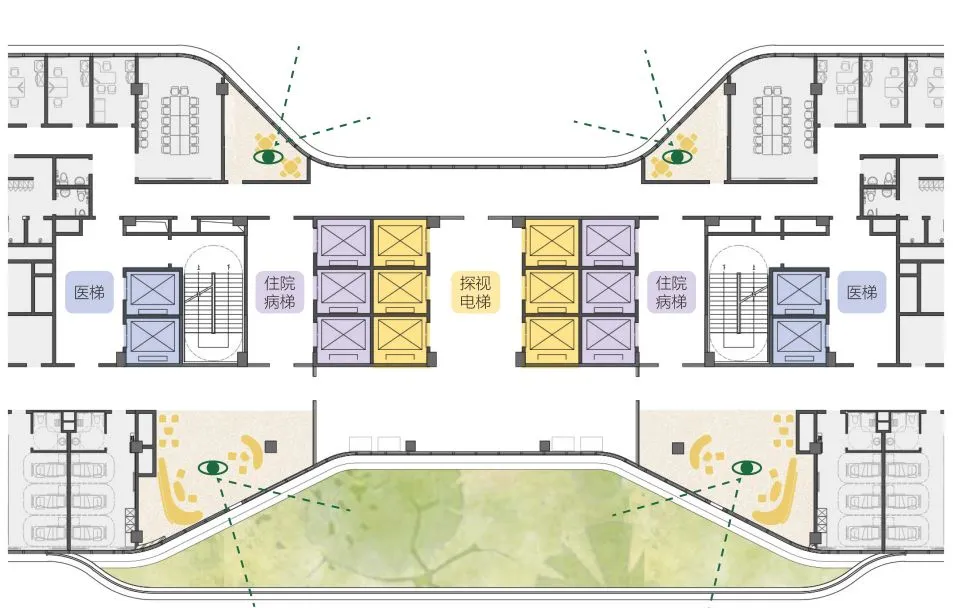
Hospital ward common areas
Urban Integration: Creating a Synergistic Relationship with the City
This design integrates ancillary medical support functions into the transitional spaces where the building meets the urban fabric. By doing so, it not only enriches the architectural program but also mirrors essential city functions within the hospital grounds. This approach provides convenience for patients while surrounding them with familiar daily life scenarios, helping to normalize the healthcare environment.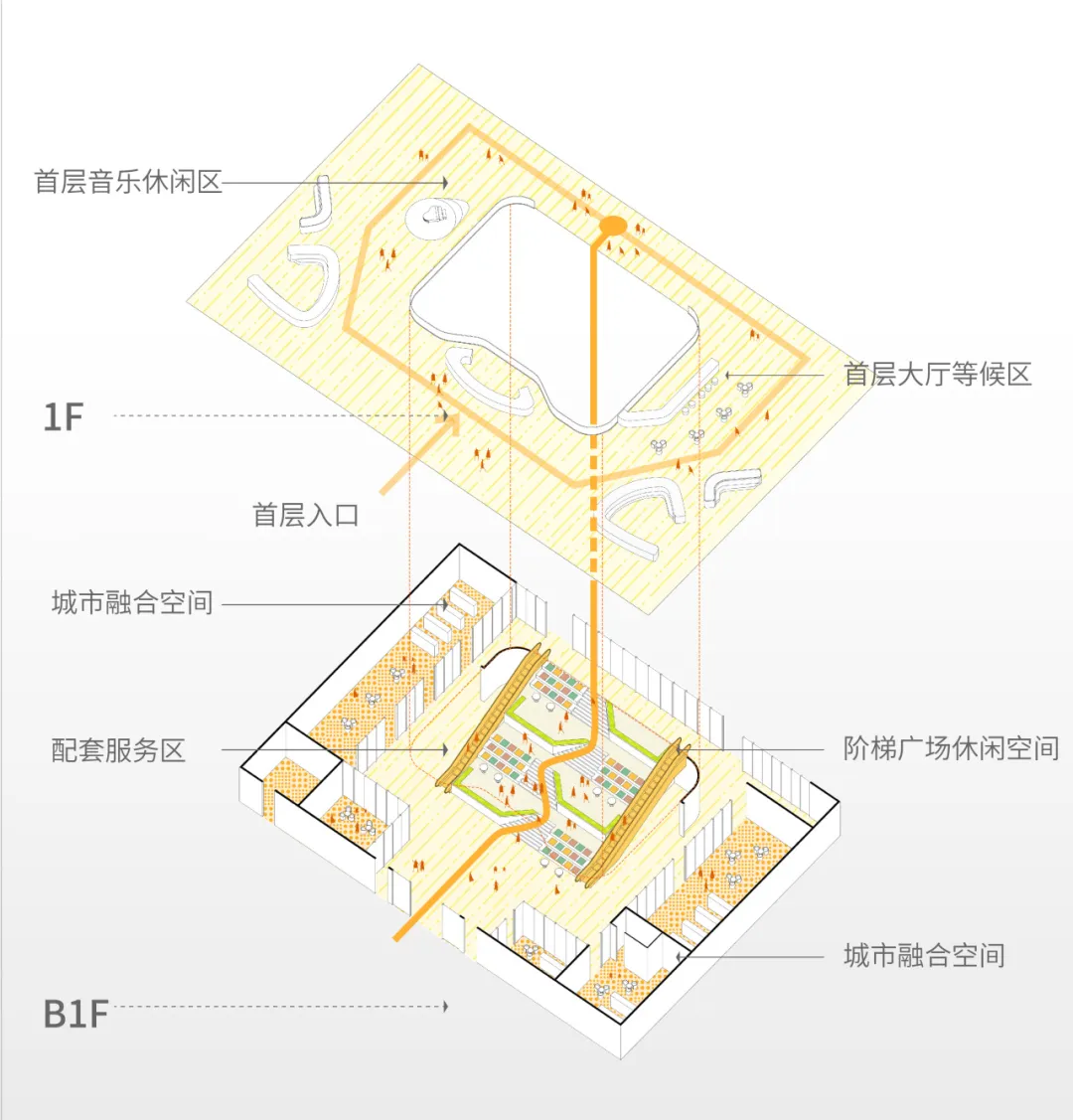
Functional distribution map of urban integration zones
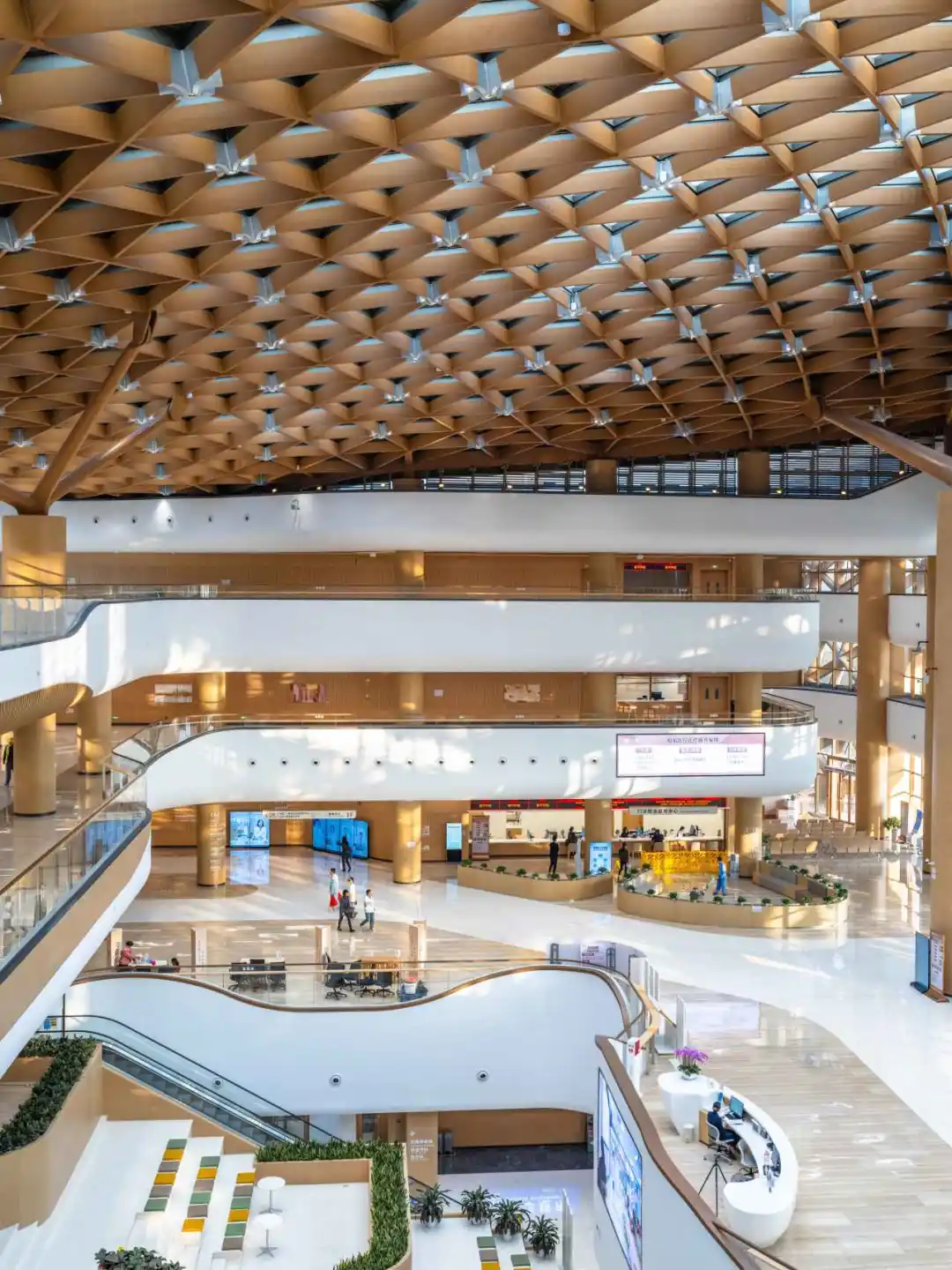
Ground floor urban integration space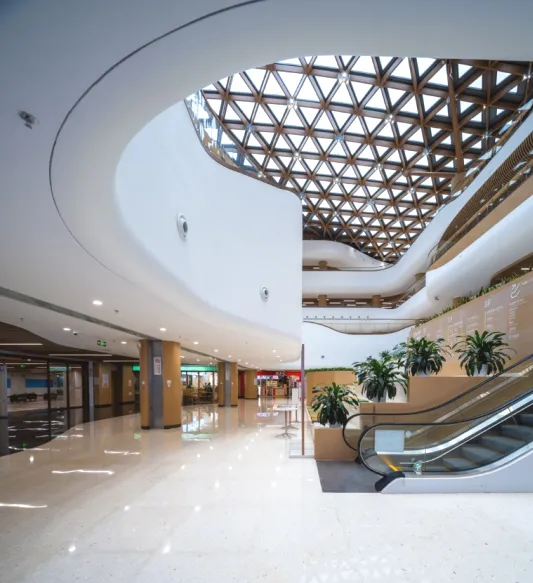
Underground medical support space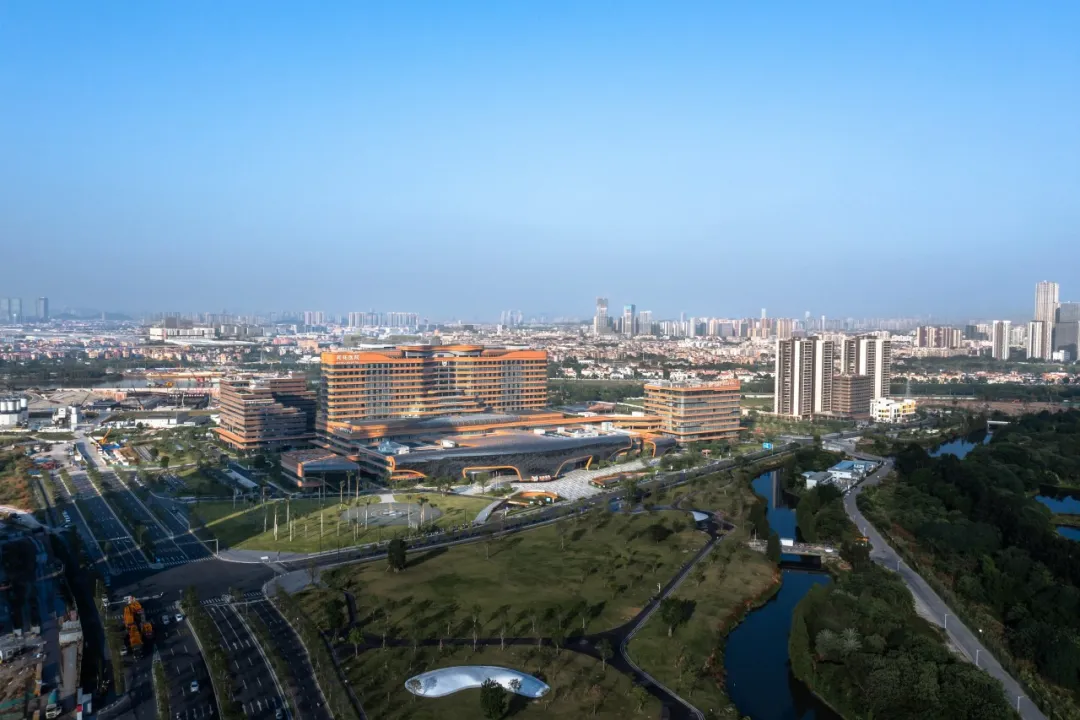
Bird's-eye view
Project Information
Project Name: HEYOU Hospital (Phase I)
Project Location: Shunde District, Foshan, Guangdong Province,China
Green Building Rating: Two-Star Grade (China)
LEED Certification: Gold Level (IMC)
Design Institute: Zhubo Design Co., Ltd.
Gross Floor Area (GFA): 383,000 (Phase I: 286,000 )
Project Scale: 1,500 Beds (Phase I: 1,000 Beds)
Project Status: Officially operational as of June 28, 2024
Construction unit: Guangdong Hekang Medical Management Co., Ltd.
Construction Management: Midea Real Estate (Meizhi Meiyu) Construction Management Co., Ltd.
Partnership Firm: BAI Design International
Medical Technology/Process Consultant: Beijing Xuanhan Ruiqin Management Consulting Co., Ltd.
Read more: https://mp.weixin.qq.com/s/-b3GX-QNx7nNGZmq-uFTYg