Chen Guoliang: Harmonizing Cutting-Edge Medicine with Human-Centered Care
Shanghai Proton and Heavy Ion Center Phase II Design
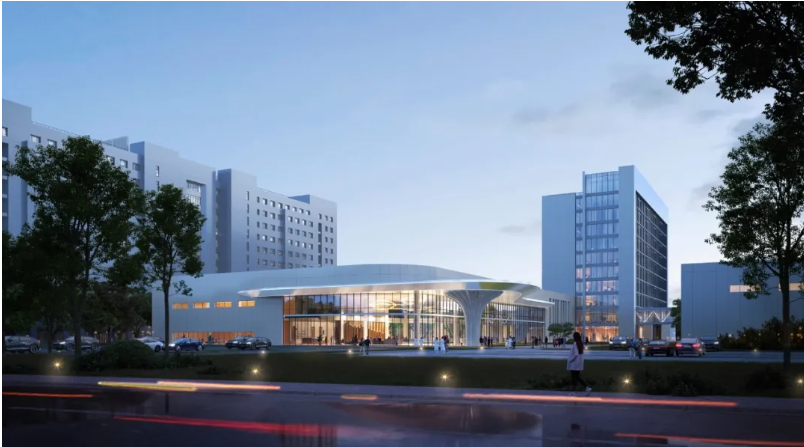
Shanghai Architectural Design & Research Institute’s Medical Architecture Design Institute recently won the bid for Phase II of Shanghai Proton and Heavy Ion Center, a nearly 70,000 m² expansion featuring one proton therapy and one heavy ion therapy unit. Once completed, it is poised to become the world’s largest particle therapy center. Chen Guoliang, Master of Engineering Survey and Design in Shanghai, shared insights on the project’s design philosophy, technological innovation, and patient-centered approach.
01 Core Philosophy: Building on Technology, Healing Through Space
“Proton and heavy ion therapy equipment is a national-level technological asset, and its precision requirements pose significant design challenges. Yet we always believe that technology is a means, and people are the ultimate purpose,” said Chen Guoliang, introducing the Phase II project’s guiding principle: “Technology as the foundation, space as the soul.”
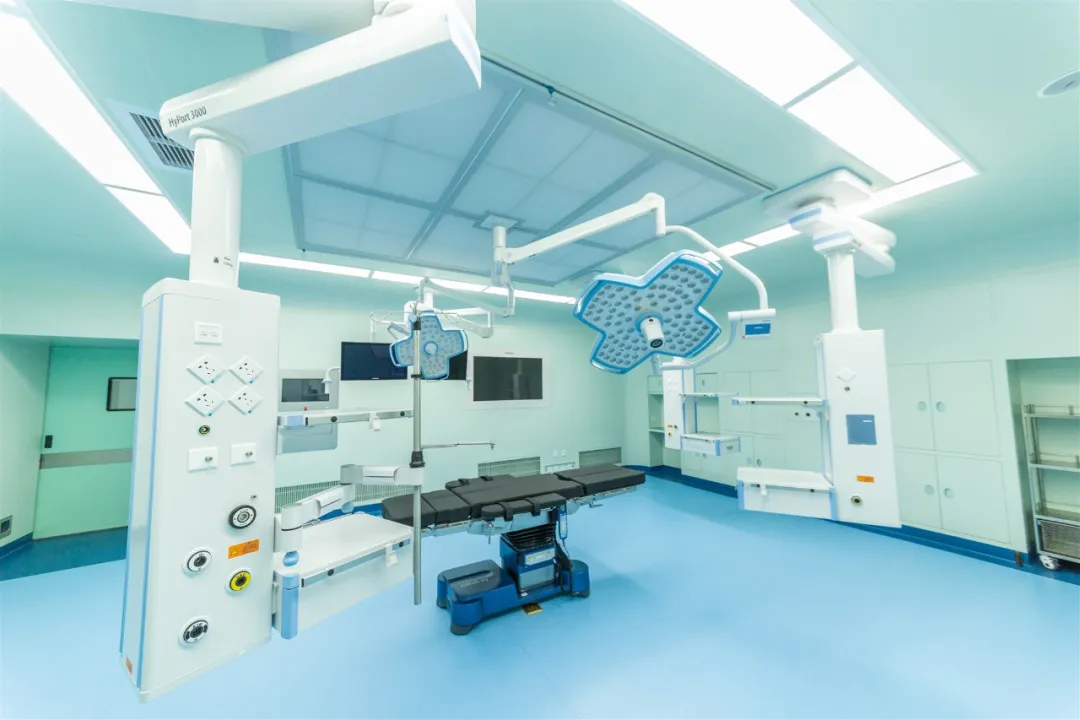
On the technology foundation side, the team faced three key challenges. First, meeting the strict site requirements of the equipment, including spatial dimensions, radiation shielding, and micro-vibration control. Second, achieving precise operational conditions, such as maintaining extremely tight tolerances for cooling water temperature. Third, efficiently organizing workflows so that patients, medical staff, and engineers can move safely and smoothly without interference.
The space as soul concept focuses on making the medical environment warm and human-centered. “We approached this on three fronts: balancing convenience with privacy, for example by optimizing consultation layouts to reduce patient backtracking while protecting privacy through thoughtful zoning; creating natural healing environments by introducing daylight and greenery via landscaped courtyards and light wells; and embedding care into the details, such as seat heights and handrails in waiting areas, tailored to patient needs,” Chen explained. “Cold, high-tech equipment requires a warm spatial environment, so treatment not only heals the body but also comforts the mind.”
02 Harmony of Old and New: Strategies for Continuity and Upgrade
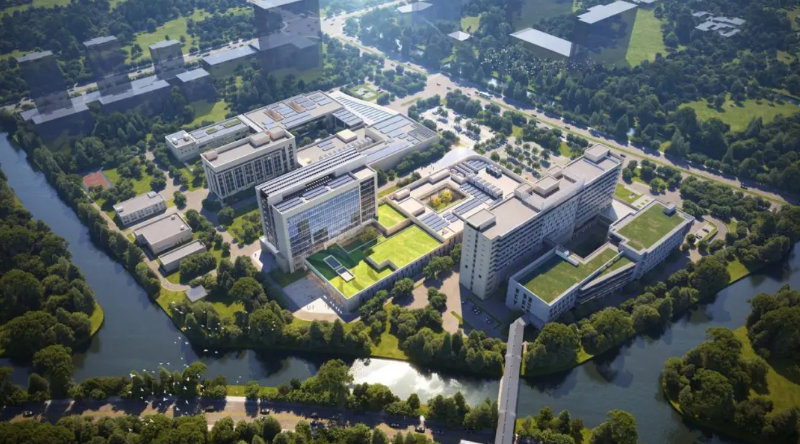
Phase II is located on a reserved site between Phase I and the Clinical Medicine Center of Shanghai Cancer Hospital. How can the new building integrate organically with the existing structures? Chen Guoliang outlined four guiding strategies: planning continuity, functional complementarity, efficient space use, and harmonious unity.
“Planning continuity is fundamental,” he said. The team extended the development axis established sixteen years ago, strengthening connections underground, at ground level, and above. Underground corridors seamlessly link Phase II with Phase I to form an integrated radiation treatment center. At ground level, pedestrian axes and landscaped courtyards create a continuous walking experience. Above, aerial corridors enhance interaction between research and clinical areas, forming a cohesive “three-in-one” spatial system.
Functionally, Phase II marks a transition from purely clinical care to a medical-education-research hub. The basement houses China’s only modern tumor radiation center with three proton and heavy ion therapy units, while also providing research and teaching spaces, creating a complementary relationship with Phase I and establishing a national technical center for oncology radiation therapy.
The challenge of efficient space use is significant: Phase II is larger than Phase I and houses two advanced devices, yet the site is only half the size. “This requires a more compact layout without compromising comfort,” Chen explained. Through meticulous simulation and optimization, the team achieved both functional density and a superior patient experience.
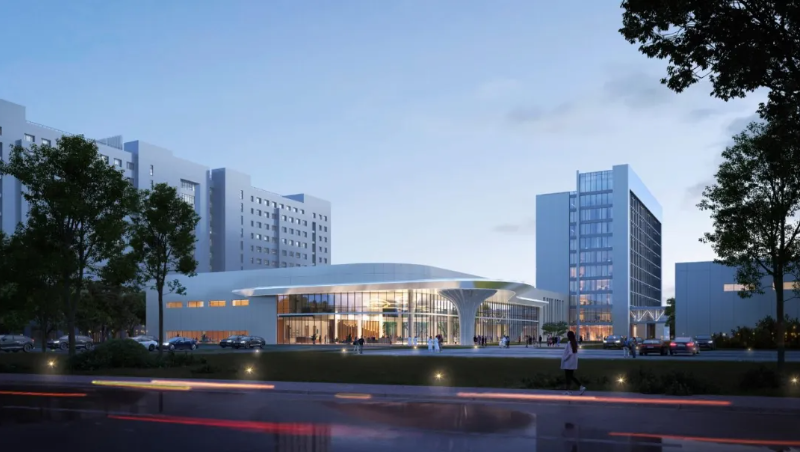
Architecturally, Phase II embraces “innovation through continuity.” It continues Phase I’s stylistic language and façade materials to maintain unity, while enhancing the main entrance and incorporating green building concepts, giving the design a contemporary feel. “We do not aim for gimmicks; instead, we achieve an upgrade that is harmonious yet distinctive—this is our understanding of unity,” Chen concluded.
03 Managing Patient Flow: Designing for People, Not Just Technology
As what could become the world’s largest particle therapy center, Phase II faces a major challenge: how to handle a growing number of patients smoothly and comfortably. Chen Guoliang explained that the team approached this with careful planning, thoughtful workflow design, and smart allocation of resources.
“Proton and heavy ion therapy is unique, which actually gives us an advantage in designing patient flows,” he said. Since treatments run on a full-capacity, appointment-only system, the team can predict peak periods precisely. Using data analysis, they modeled the space needs for waiting areas, changing rooms, and other key zones—so patients aren’t crowded and no space is wasted.
Beyond efficiency, the design focuses on the human experience. Treatment areas, waiting rooms, and rehabilitation zones are thoughtfully separated. Independent consultation units protect privacy, while natural light, gardens, and art create a calmer, more welcoming environment. “From the moment patients arrive to when they leave, we want every step to feel smooth and reassuring,” Chen said. “Cutting-edge treatment and a positive patient experience go hand in hand—one without the other isn’t enough.”
04 Cross-Disciplinary Advantage: The Power of Science and Medical Design
What sets the Shanghai Proton and Heavy Ion Center project apart is its unique combination of expertise. “Our strength comes from two complementary foundations,” Chen Guoliang explains: “Twenty years of experience designing large-scale scientific facilities, and more than sixty years of deep practice in medical architecture.”
In the early 2000s, Chen was involved in designing world-leading scientific installations, such as the Shanghai Synchrotron Radiation Facility and the Soft X-ray Free Electron Laser. “This work provided practical experience in areas like radiation shielding, micro-vibration control, and precise temperature stability—technical challenges that, while seemingly unrelated to healthcare, are crucial for the stable operation of proton and heavy ion therapy equipment.”
At the same time, decades of healthcare architecture design experience have reinforced a patient-centered perspective. “Once the technical hurdles are addressed, we can focus on the real core of healthcare architecture: designing spaces that reduce patient stress, streamline movement, and make the environment itself part of the healing process,” Chen says.
This cross-disciplinary approach has already proven effective across multiple projects, from Phase I of Shanghai Proton and Heavy Ion Hospital to the Lanzhou Heavy Ion Tumor Treatment Center, Hefei Ion Medical Center, and the ongoing Chengdu West China International Oncology Center. The combined technical and design expertise continues to support the successful implementation of these advanced medical facilities.
05 Industry Outlook: From Following Standards to Defining a Chinese Paradigm
Reflecting on nearly twenty years of proton and heavy ion medical facilities in China, Chen Guoliang remarked, “We have moved from an equipment-centered approach to a patient-centered philosophy, and from catching up with international standards to defining a uniquely Chinese paradigm.”
Functionally, treatment has evolved from single-discipline therapy to comprehensive, multi-disciplinary care integrating surgery, chemotherapy, and radiotherapy. Technologically, the maturation of domestic equipment allows for more flexible design, lower costs, and the possibility of renovating older hospitals. In planning, BIM and digital twin technologies enable precision design and smart facility management. Human-centered design has also become central, emphasizing privacy, family support, and natural healing rather than focusing solely on technical metrics.
“Future proton and heavy ion medical facilities will unite technical precision with human warmth,” Chen said. “Phase II of Shanghai Proton and Heavy Ion Hospital is more than just a building—it is China’s design expertise on a global stage. Our goal is for it to be not only the world’s largest particle therapy center but also a global benchmark for human-centered healthcare.”
Read more: https://mp.weixin.qq.com/s/fubrIxbnPMcPn3RifEEDmg