Building the Smart Operating Department Hospitals Really Need
In today’s fast-changing healthcare world, hospitals are eager to build operating departments that are not just functional, but smart, safe, and efficient. But what does a modern operating department actually need, and who should be involved in building it? Wang Chaoyang, Head Nurse of the Surgical Department at the Affiliated Central Hospital of Shandong First Medical University, points out that the key factors are the layout of the department, the number and type of operating rooms, and how auxiliary spaces are planned. Other questions include whether to use digital integrated or hybrid operating rooms, and how to design each space according to the hospital’s real needs.
I. Overall Requirements for Operating Department Construction From the perspective of those who use it every day, an operating department should be professional, safe, and patient-centered. Hospitals also hope to see progress in areas such as smart management, specialized nursing training, streamlined workflows, infection control, and personalized patient care. At the same time, there is an expectation that the department will support the growth of smart operating rooms and foster international collaboration, helping advance surgical nursing in China over the long term.
Building an operating department requires a team effort. It involves multiple departments, including infrastructure, biomedical engineering, IT, and logistics, as well as clinical areas like the operating room, anesthesia, pathology, transfusion, pharmacy, sterilization, and surgical specialties. On the management side, support from medical staff, nursing, infection control, research, and teaching teams is also essential. Successful construction relies on input from multiple roles, cross-department support, structured processes, and expert guidance. Hospitals with staff who have hybrid skills across clinical and technical areas have a significant advantage in building high-quality operating departments.
1. Architectural Design Requirements 1.1 Determining the Number and Level of Operating Rooms
The number of clean operating rooms should be based on the hospital type, total bed count, and annual surgical volume. For example, according to GB50139-2014, one operating room is recommended for every 50 total beds or every 25–30 surgical beds. T-CAME 39-2021 suggests that the ratio of operating rooms to total hospital beds should be greater than 1/40, or greater than 1/20 when calculated against beds in surgery-related departments. It also recommends that the proportion of first-level operating rooms in a general hospital should not exceed 25% of all operating rooms, and should be no less than 10%. Hospitals should use these standards as a reference while also considering their own specialty focus and long-term development goals when planning operating room numbers and levels.
1.2 Operating Department Layout
When designing the operating department, hospitals need to consider three levels: its relationship with the overall hospital building, the internal floor plan of the department, and the layout of individual operating rooms.
At the hospital level, the operating department should be a distinct zone, ideally located near surgical intensive care units and easily connected to key support areas such as radiology, pathology, sterilization, and transfusion. A well-planned layout can significantly improve efficiency. For example, one hospital’s single-floor emergency OR design reduced door-to-balloon times to just 9 minutes, saving lives and ensuring patient safety—a clear example of how smart design improves both speed and quality of care.
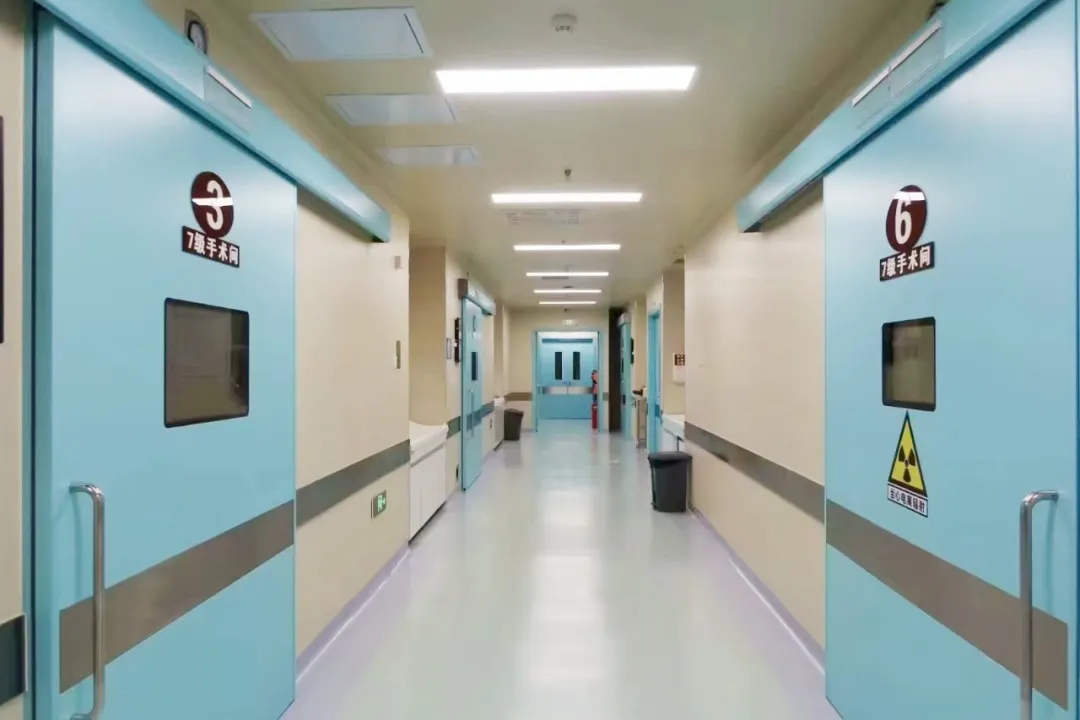
Inside the department, the floor plan should be logical, with smooth connections and clear separation between clean and contaminated areas. Common designs include single-front corridors, double corridors before and after ORs, multi-corridor layouts, centralized sterile supply corridors (central island), and ORs with ante-rooms. According to T-CAME 39-2021, functional zones should be clearly defined, including the surgical work area, administrative/living areas, sanitary access areas, waste disposal, and buffer/waiting zones. Clean areas should be separated from non-clean areas using buffer rooms or transfer windows. During the design process, architects and planners should work closely with the hospital, particularly the head nurse and anesthesia director, to ensure rooms are positioned logically for convenient, safe, and efficient operations.
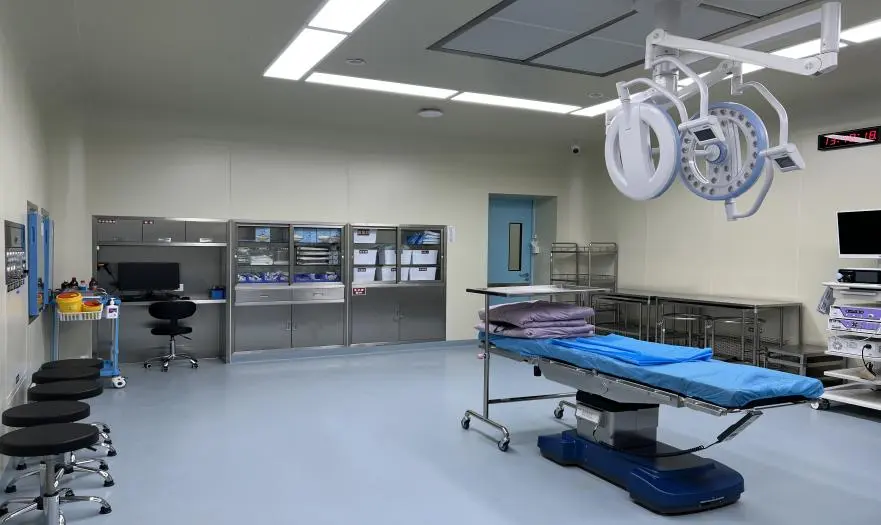
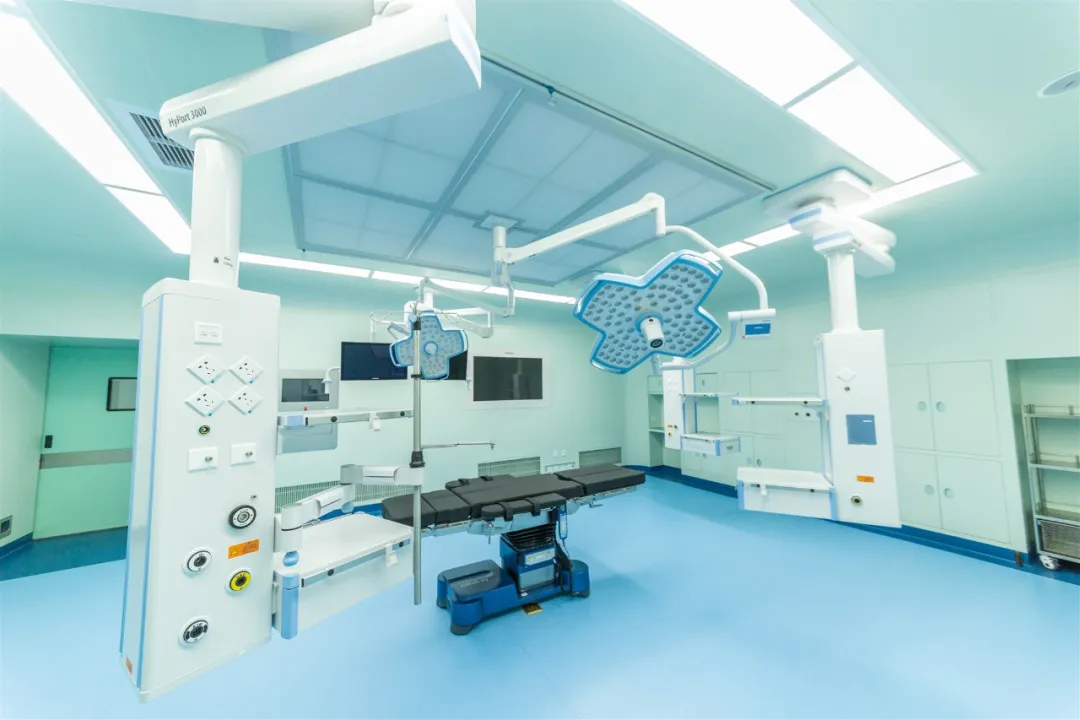
Internal Layout of Operating Rooms The layout inside each operating room should be designed around how the team actually works. According to GB50333, essential equipment—like shadowless lights, operating tables, anesthesia machines, and monitoring devices—can be arranged to fit the hospital’s real needs. The placement of built-in or embedded equipment is especially important and should reflect the workflow of surgeons, nurses, and anesthetists, making their work safer, faster, and more efficient.
1.3 Human-Centered Design
Operating room design should fully consider the habits of medical staff and the comfort of patients. In particular, the living and working areas within the surgical department need careful planning. Surgeons and staff often spend long hours here, and some may even have all three meals inside the department. The design should therefore provide comfortable dining spaces, with options for light meals or hot meals available 24/7. Rest areas are equally important and should be placed in spots with natural sunlight and views of the outside world, while remaining close to the operating rooms. This allows staff to take effective breaks and relax during surgery intervals.
2. Environmental Requirements 2.1 Temperature and Humidity Control
The temperature and humidity in operating rooms are critical for both surgical performance and patient recovery. According to standards, operating room temperatures should be maintained between 21°C and 25°C, with humidity levels between 30% and 60%. Clean operating areas can use independent heating and cooling systems or connect to the hospital’s central system. Seasonal changes and different surgical needs must be considered, so appropriate humidifiers and dehumidifiers should be installed. For operating rooms sharing the same system, each room should allow independent temperature control. Temperature or humidity deviations should not exceed five days per year, and consecutive two-day deviations should occur no more than twice per year.
2.2 Air Purification
Air purification is essential to maintain operating room air quality. High-efficiency filters and laminar flow systems should be used to keep bacteria, viruses, and other microbes within national standards. Regular maintenance and cleaning of the air purification system are required to ensure reliable operation.
Noise Control
Operating rooms should maintain a quiet environment to minimize distractions for both medical staff and patients. Soundproof materials and noise-reduction equipment should be used to lower noise levels inside and around the operating room.
3. Smart Operating Room Requirements 3.1 Digital Operating Rooms
Digital operating rooms are a key part of a smart surgical department. Advances in surgical technology drive the need for smarter operating rooms. By integrating medical devices and information systems, the surgical process can be managed digitally and intelligently. For example, staff can monitor patients’ vital signs and surgical progress in real time, improving both safety and efficiency.
3.2 Medical Information Integration A smart surgical department should enable the collection and sharing of medical information. By integrating Hospital Information Systems (HIS), Laboratory Information Systems (LIS), and Picture Archiving and Communication Systems (PACS), all relevant data during surgery can be collected, stored, and analyzed in real time. This helps staff make accurate diagnoses and treatment decisions while improving overall medical quality and efficiency.
3.3 Teaching and Collaboration Smart surgical departments should also support teaching and professional communication. In-room teaching systems allow staff to observe procedures in real time and discuss them. Remote guidance and teleconsultation technologies enable collaboration with experts both nationally and internationally.
Case Study: Smart Operating Room Renovation in a Tertiary Hospital
The hospital’s original operating rooms had been in use for many years, with outdated equipment and suboptimal environments that no longer met modern medical requirements. To address this, the hospital decided to carry out a phased, full-area smart renovation. The project covered 23 operating rooms, staff living and working areas, anesthesia and recovery units, spanning three floors. The renovation included environmental improvements, equipment upgrades, and information system development.
For environmental improvements, the hospital adopted advanced air purification technology to enhance operating room cleanliness. Human-centered design was applied to improve staff comfort and workflow. For equipment upgrades, the hospital installed high-definition camera systems, intelligent anesthesia machines, and other advanced devices to enhance surgical quality and safety.
In terms of information systems, the hospital established an operating room information management system, enabling digital management of surgery scheduling, staff rostering, and anesthesia records. The smart management system allows real-time monitoring of the operating room environment and equipment status, ensuring safe surgical operations.
After completion, the hospital’s operating rooms showed significant environmental improvements, while surgical quality and safety were effectively enhanced. The smart renovation also boosted overall hospital efficiency and service levels, providing patients with higher-quality care.
Read more: https://mp.weixin.qq.com/s/kvFxpbBi9-WfDlFG2dwDVA
Subscribe to our newsletter
Get updated news about CHCC by subscribing CHCC newsletter.
-
 Read moreIndustry News 2026.05.15
The CHCC 2026 Exhibitor List is officially LIVE
Connect with global healthcare infrastructure suppliers.
-
 Read moreIndustry News 2026.02.28
Beyond the Tubes: Unlocking Spatial Efficiency and New Design Paradigms with Intelligent Logistics
How smart logistics transport systems influence hospital spatial forms.